Article: 18K Gold vs 14K Gold: What's the Difference?
18K Gold vs 14K Gold: What's the Difference?
If you've ever bought a gold necklace and noticed the tiny stamp on the clasp — 18K, 14K, 750, 585 — and had no idea what it meant, you're in good company.

Most people pick gold jewellery based on how it looks in the moment. But understanding what's actually in the metal changes how you shop, what you pay, and how long a piece stays looking good.
Here's what you actually need to know.
What the "K" Number Tells You
Karat measures how much of a piece is pure gold. 24K is pure gold — soft, bright, and completely impractical for daily wear.

So jewellers mix it with other metals to harden it. The karat number is just telling you the ratio.
According to the World Gold Council, gold alloys have been used in jewellery for thousands of years — the mixing isn't a compromise, it's what makes the metal wearable.
| Gold Type | Gold Content | Other Metals |
|---|---|---|
| 24K | 99.9% | — |
| 18K | 75% | 25% |
| 14K | 58.3% | 41.7% |
That 16.7% difference between 18K and 14K might not sound like much, but it shows up clearly in colour, price, and how the piece sits on your skin.
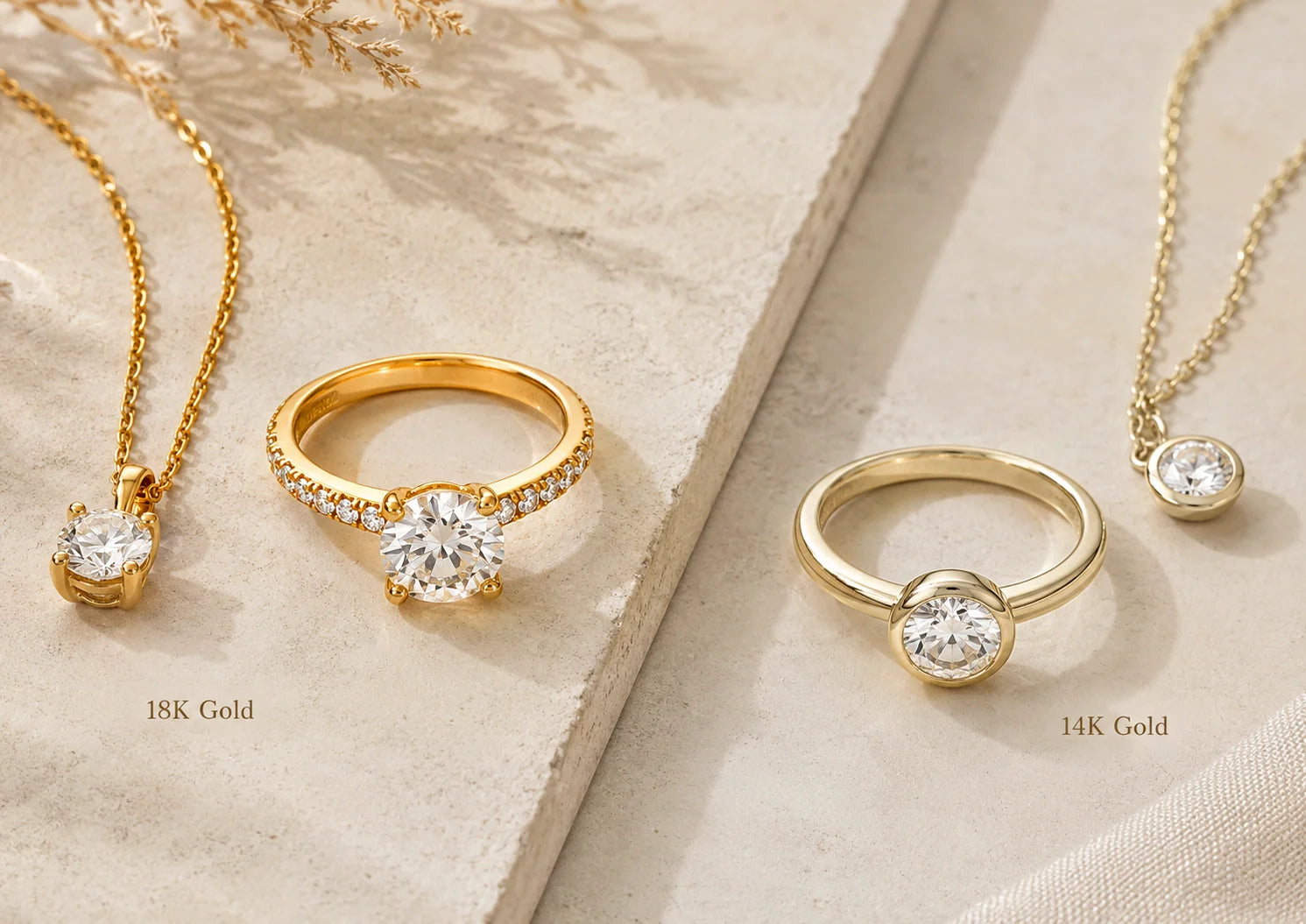
18K Gold
75% pure gold. That's enough to give it a genuinely warm, deep yellow tone — the colour most people picture when they think of fine gold jewellery. It's the standard used by most high-end jewellery houses, and the gold used across our 18K Gold Jewelry collection at Leming Jewelry.
What it does well:
- The colour is richer and warmer than 14K — noticeably so in yellow gold
- Higher purity means fewer alloy metals touching your skin, which matters if you're prone to reactions
- Diamonds look better set in 18K — the warmth of the metal makes stones appear brighter by contrast
- More gold content means better long-term value if you're thinking about resale
The honest trade-off:
It's slightly softer than 14K. For necklaces and earrings this rarely matters. For rings worn while doing manual work, it may pick up fine scratches faster than 14K would.
14K Gold
58.3% pure gold, with a higher proportion of alloy metals making it harder and more resistant to scratching. It dominates the US market for a reason — it's durable, more affordable, and still real gold.
What it does well:
- Holds up better to rough daily wear — rings, bracelets, anything that takes knocks
- Lower price point without stepping outside real gold entirely
- Works well in white gold and rose gold, where the colour difference from 18K is less obvious
The honest trade-off:
In yellow gold, the colour is noticeably cooler and paler compared to 18K.

The higher alloy content — often including nickel — also raises the risk of skin irritation for people with sensitive skin. According to the NHS, nickel is one of the most common causes of contact dermatitis, worth keeping in mind if your skin reacts to cheaper metals.
Side by Side

| 18K Gold | 14K Gold | |
|---|---|---|
| Gold Purity | 75% | 58.3% |
| Colour | Warm, deep yellow | Cooler, slightly pale |
| Durability | Very good | Excellent |
| Skin Sensitivity | Lower risk | Moderate risk |
| Price | Higher | Lower |
| Resale Value | Higher | Lower |
| Best For | Fine jewellery, gifting, daily elegance | Heavy daily wear, active lifestyles |
What About 9K Gold?
9K gold sits at 37.5% pure gold. Under UK Assay Office standards, this is the legal minimum gold content for a piece to be hallmarked and sold as gold in Britain. It's the hardest and most affordable of the three, but the colour is noticeably lighter — less of that warm golden tone, more of a pale yellow. Some people with sensitive skin still react to it, given how much alloy it contains.

It's a solid option if price is the deciding factor. We carry a range in our 9K Gold Jewelry collection for those who want real gold at a more accessible entry point.
Which One Should You Actually Buy?
18K makes sense when the piece is meant to last — a gift, a daily fine accessory, anything set with diamonds or gemstones. The colour and quality justify the price, and it holds its value. Our Diamond Jewelry and Necklaces collections are all 18K for exactly this reason.
14K makes sense when durability is the priority over colour — active lifestyles, manual work, or if budget is a genuine constraint.
9K makes sense as an entry point into real gold, particularly if you're buying for everyday casual wear and aren't focused on the depth of colour.
Why We Use 18K Gold
We use 18K gold across everything we make at Leming Jewelry. The GIA identifies gold purity as a direct factor in a piece's appearance, skin compatibility, and long-term wearability — and in our experience, 18K consistently delivers on all three.
The pieces we make aren't meant to sit in a box. They're meant to be worn every day, or kept for years and given to someone on a day that matters. For that, the metal has to be right. 18K is where we landed, and it's a decision we've never felt the need to revisit.
👉 Start with what our customers reach for most in our Best Sellers collection.
Any questions about which gold suits a specific piece? Reach out at lemingjewelry.com — happy to help.

Written by Leming Jewelry | Fine Jewellery Education